
Coin Flip Explained: Meaning, Uses, and Fair Decisions
A coin flip is a simple and widely accepted way to make a fair decision between two equally valid options. With only two possible outcomes – heads or tails – the result is immediate, neutral, and easy to understand. For centuries, people have relied on coin flipping to settle questions without debate or bias.
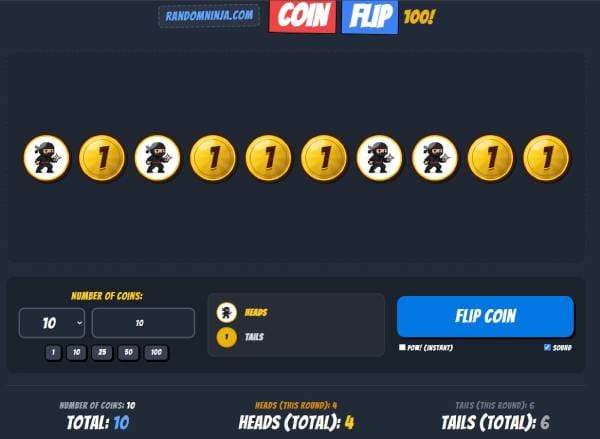
If you want to decide immediately, you can perform a coin flip online.
What is a Coin Flip?
A coin flip is the act of tossing a coin and observing which side faces up after it lands. Because both sides have an equal chance, the outcome is considered fair and random. This makes a coin flip especially useful when logic, discussion, or preference cannot clearly determine a choice.
The Math Behind the Flip: Physical vs. Digital
While a physical coin toss is often seen as the gold standard of fairness, studies (such as those by Stanford professor Persi Diaconis) suggest that physical coins can have a slight bias depending on which side starts facing up. In contrast, a digital coin flip using the Web Crypto API removes these mechanical variables. By using cryptographically secure random number generators (CSPRNG), the probability is locked at an exact 50:50 ratio, making digital flips theoretically fairer than physical ones for high-stakes decisions.
Why Coin Tosses Are Used for Decisions
Coin flipping removes responsibility from the decision maker. Instead of arguing or overthinking, the result is accepted as neutral.
Common reasons people use a coin flip include:
- deciding between two options
- breaking a tie
- choosing who starts a game
- resolving small disagreements
- making spontaneous choices
Interestingly, psychologists note that the emotional reaction to the result often reveals a person’s true preference.
The “Freudian” Coin Toss Trick
Many people use a coin flip not just to let fate decide, but to uncover their own subconscious desires. This is often called the “Freudian Coin Toss.” The moment the coin is in the air, or just as the result is revealed, you may feel a sudden flash of hope or disappointment. This emotional reaction tells you exactly what you actually wanted. In this way, a coin flip acts as a tool for self-reflection rather than just a randomizer.
Coin Flip vs Other Decision Methods
There are many ways to make decisions, but coin flips stand out because they are:
- fast
- unbiased
- universally understood
- free from manipulation
Unlike discussions or voting, a coin flip produces a result instantly and without negotiation.
When a Digital Coin Flip Makes Sense
While traditional coin flips require a physical coin, digital coin flips are often more practical. They allow decisions to be made anytime, anywhere, without needing an object or another person. If you want to make a decision immediately, you can perform a coin flip online instead of using a physical coin.
Is a Coin Flip Truly Fair?
A coin flip is fair as long as each outcome has an equal probability. In digital environments, fairness depends on how randomness is generated.
Modern tools use secure randomization methods to ensure that each flip is independent and unbiased.
Coin Flips in History, Sports, and Culture
Coin flipping has been used for thousands of years. In ancient Rome, people played games and settled disputes using coins. Over time, the method spread across cultures and societies. In modern sports, coin flips are still essential. They determine who starts a match, who chooses sides, or who gains possession. Beyond sports, coin flips appear frequently in movies and literature as symbols of chance, fate, and impartial decisions.
Flip a Coin Online
Frequently Asked Questions
Is a coin flip really a fair way to make a decision?
Yes. A coin flip is considered fair because each outcome—heads or tails—has the same probability. When neither option is objectively better, a coin flip removes bias and allows a neutral decision without debate or influence.
Is an online coin flip truly random?
A properly implemented online coin flip can be truly random. Modern tools use cryptographically secure random number generators, which ensure that each flip is independent and has an exact 50:50 probability, without patterns or manipulation.
Why do people use a coin flip even when they already have a preference?
Many people use a coin flip to reveal their true preference. The emotional reaction to the result, relief or disappointment, often shows what someone subconsciously wanted, making the coin flip a useful tool for self-reflection as well as decision-making.
Final Thoughts
A coin flip remains one of the simplest and fairest ways to decide between two options. Its strength lies in its neutrality and speed.
If you want to turn a decision into action immediately, using a digital coin flip is often the fastest solution.